

The Briefing
Three Formula 1 engineers set out to fix the electric scooter. They ended up deleting it's most popular feature.
Why a growing number of car owners are quietly replacing short drives with something that costs less than a few months of car payments.
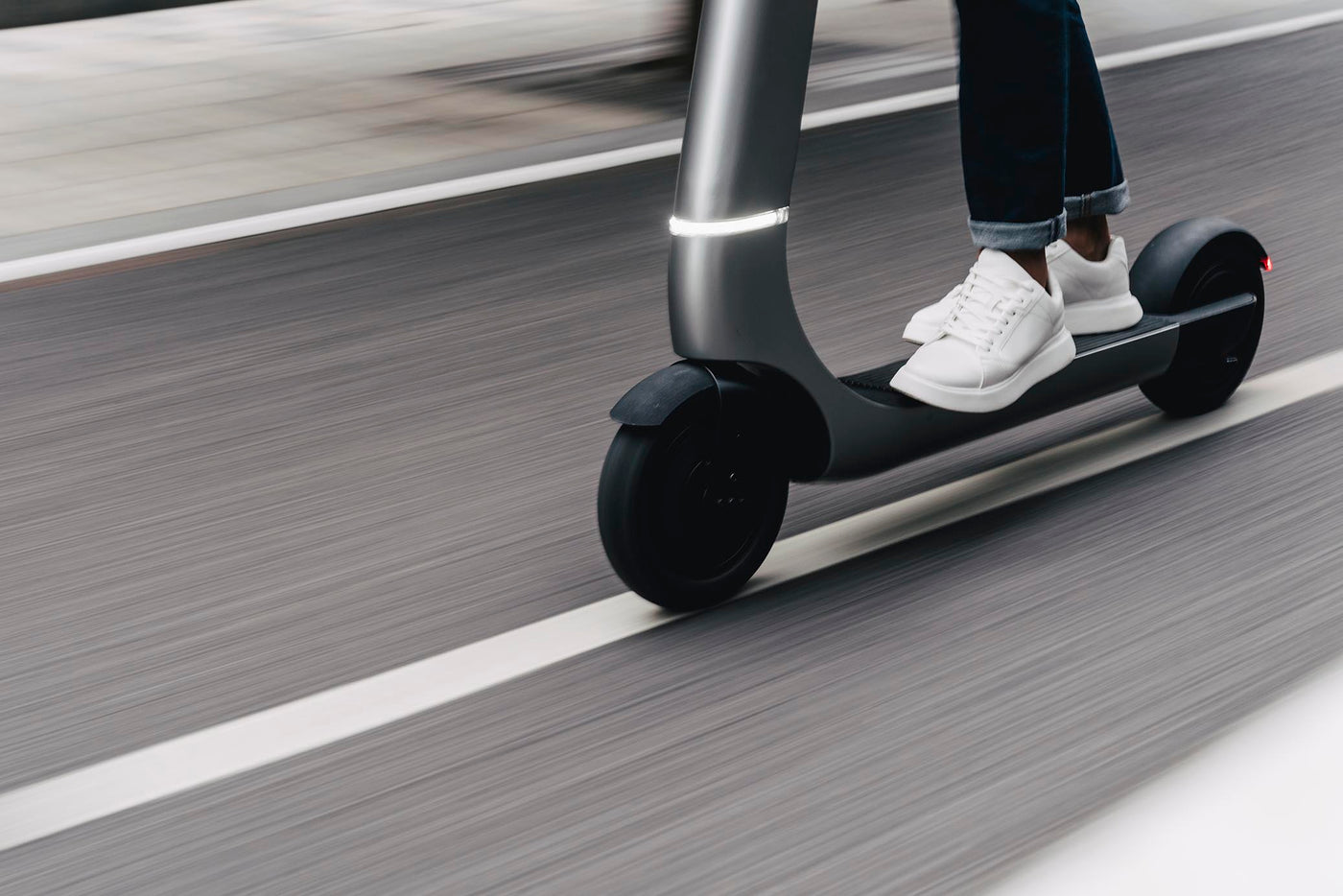
It started as a simple question.
A small team of designers, three of them from the world of automotive and Formula 1 engineering, wanted to know why electric scooters were so bad. Not bad-looking. Bad to ride. So they did something most scooter brands never bother to do. They bought the ten best-selling scooters in the world and rode every one.
The findings were worse than they expected.
Fast ones, cheap ones, foldable ones, off-road ones. Every single model wobbled at speed. Most struggled up the smallest hill. And nearly all of them felt cheap, because they were built that way to hit a price. These were the best-sellers, the ones millions of people actually buy, and not one of them was a vehicle the engineers looked forward to riding.
Then they noticed the pattern. The thing nearly every scooter had in common. The thing customers actually ask for.
The fold.
The feature everyone wants is the reason every scooter feels cheap
Here's what no scooter brand will tell you, because they're all selling the fold as a feature: a folding hinge in the middle of a vehicle is a structural disaster.
It's the part that wobbles. The part that loosens over a few hundred miles. The part that rattles, flexes, and eventually fails. You feel it as that vague, nervous looseness at speed, the sense that the thing under your feet isn't quite solid. Engineers have a word for it. They call it a hinge because that's exactly what it is: a deliberate weak point, designed into the middle of the one vehicle you trust with your balance.
Cars don't fold in half. Motorcycles don't fold in half. There's a reason for that.
So the team made a decision that sounds, at first, insane. They deleted the fold.
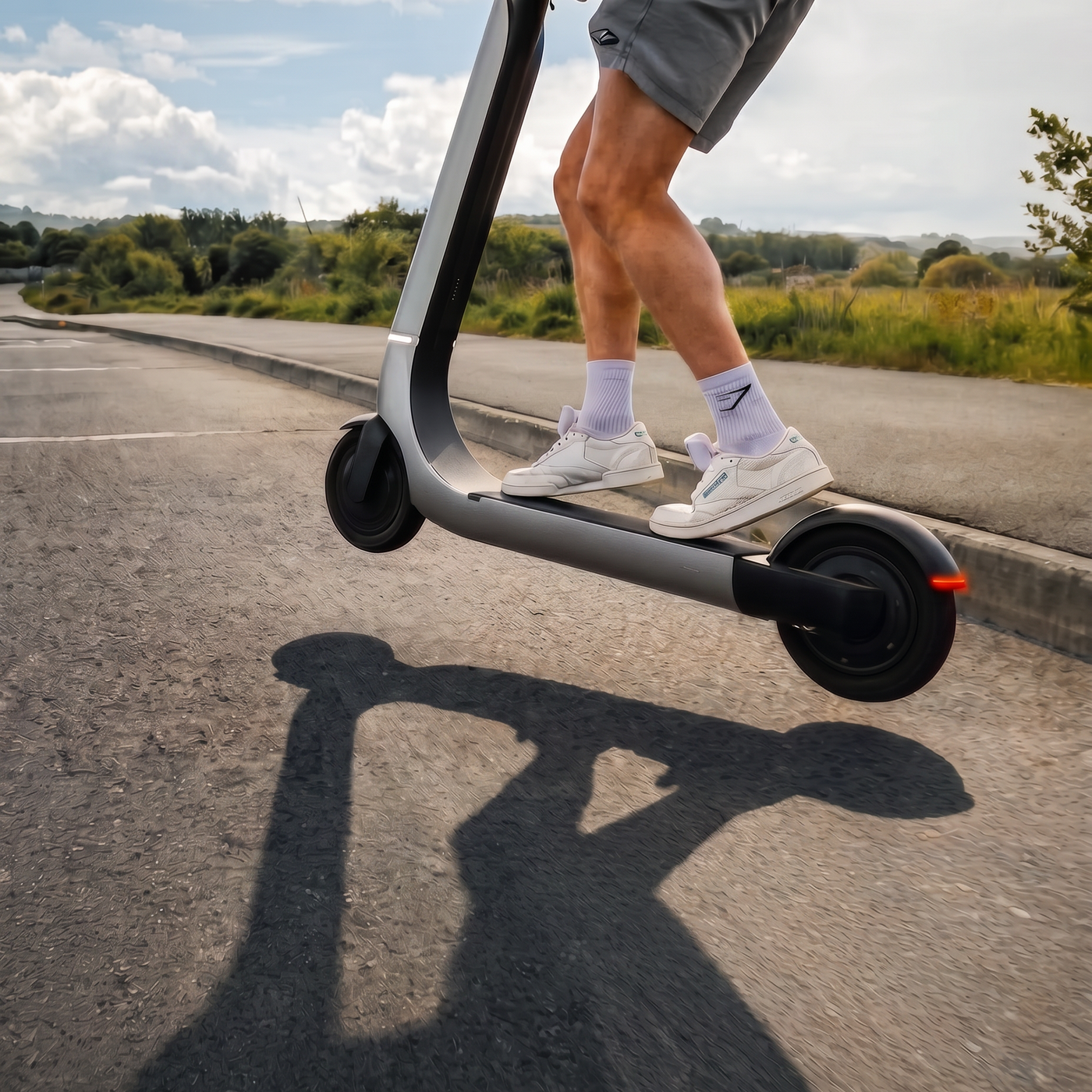
What you get when you remove the weak point
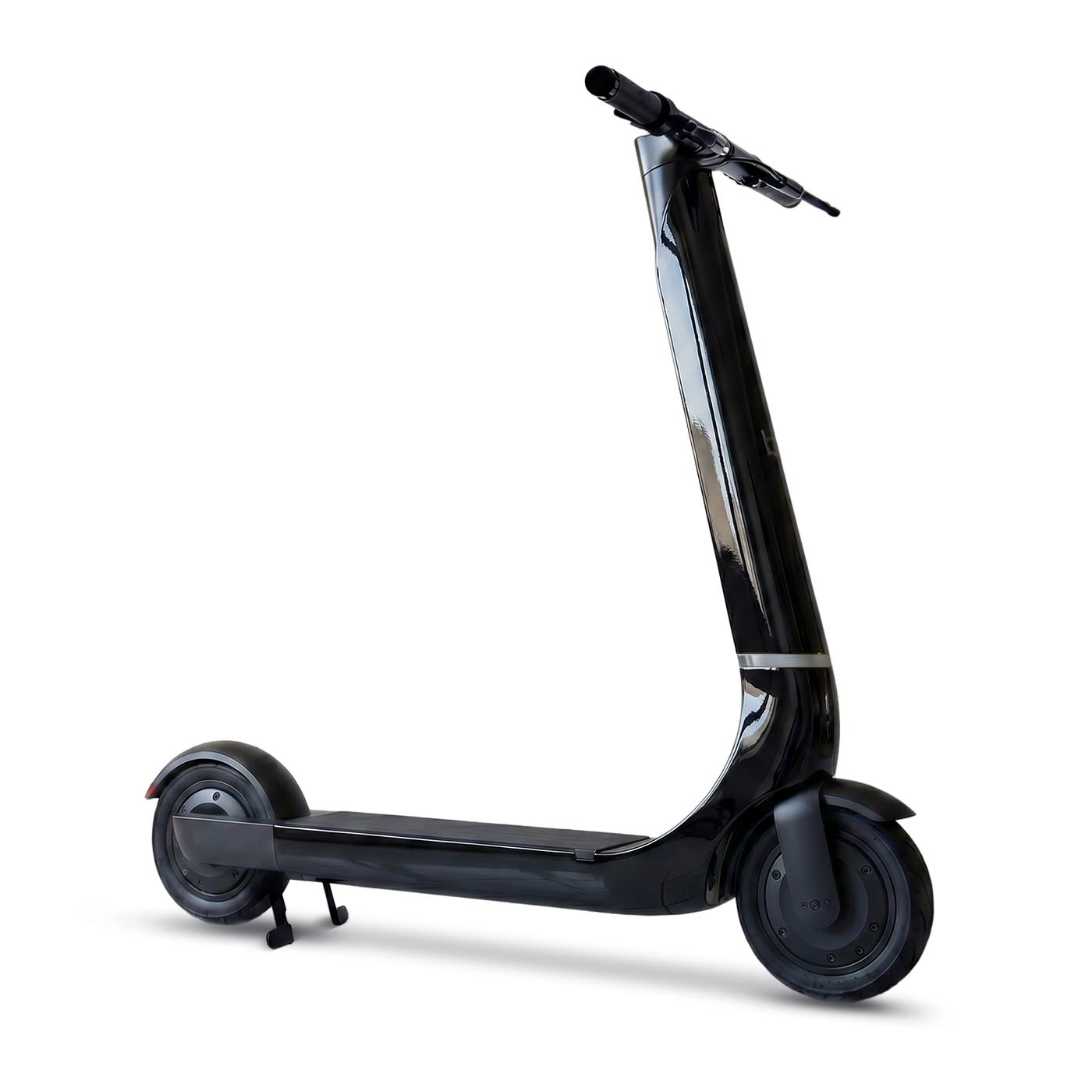
In its place they engineered something no scooter had: a single, unbroken piece of aerospace-grade aluminium. One continuous frame, from the front wheel to the back. They call it the Monocurve chassis, and it is roughly 30 times stiffer than a Segway.
The difference is not subtle. It's the first thing you feel when you step on.
Owners reach for the same word, over and over, to describe it: floating. The ride feels less like commuting and more like skiing. Planted. Balanced. Quiet. You can carve a corner or slalom between cones without thinking about it, because there's no hinge in the middle second-guessing you. Inside that frame sits a patented stabiliser called Safesteer, which gently smooths bumps and keeps the front wheel from the twitchy wobble that makes cheap scooters feel dangerous.
Five years of engineering went into making a scooter feel like a real vehicle. The result is the Bo M.
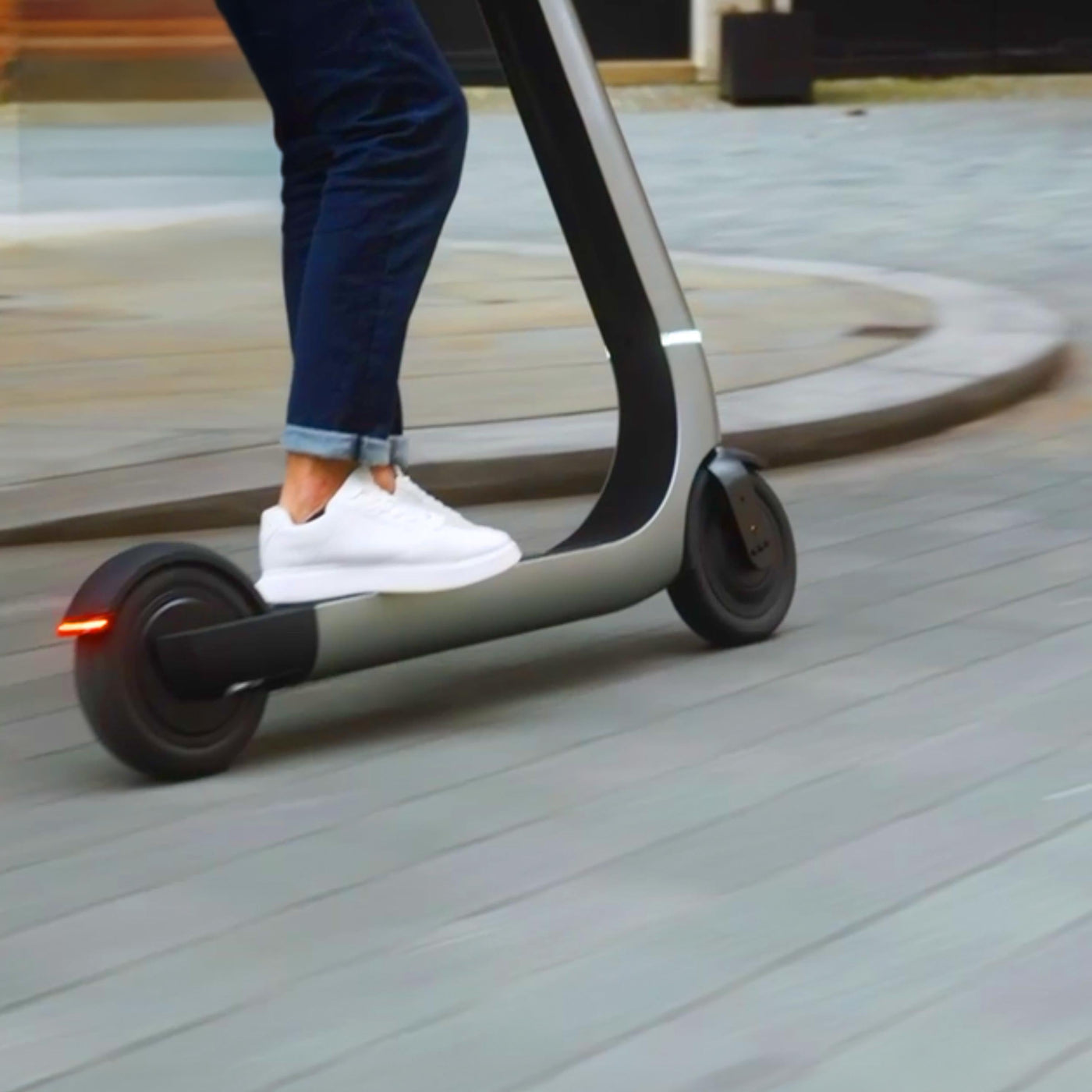
You feel like you're floating along.
— Craig W., Bo owner
"But where do I put it if it doesn't fold?"
This is the first thing everyone asks. It was the first thing we asked too.
The honest answer: you don't really need to. The Bo weighs 48 pounds, less than a lot of carry-on luggage, and it slides into most car trunks. Owners load it into Teslas, minivans, and SUVs without ceremony. It's built as a door-to-door vehicle, the kind of thing you ride from your front door to wherever you're going, so the folding-and-carrying ritual that scooters were designed around mostly disappears.
And here's the quiet part. A frame with no joints to wear out is a frame that lasts. That's why Bo backs it with a lifetime warranty on the chassis. You're not buying a gadget you'll replace in two years. You're buying a vehicle.
Why car people are the ones buying it
There's a pattern in who ends up owning one, and it surprised even Bo.
It isn't the spec-chasers arguing about top speeds in comment sections. It's people who already own a nice car, often a Tesla, and who have simply run out of patience with what short trips have become. The ten-minute drive that takes twenty-five with parking. The coffee run. The school pickup. The dinner you're now late for. A car is a miserable tool for any of it.
The Bo M3, the top of the range, is built for exactly those trips. It does 25 mph, climbs hills most scooters stall on thanks to 28.2 lb-ft of torque and an instant zero-start launch, and goes 30 to 40 miles on a charge. For a lot of owners, it quietly takes over the role of a second car, at a fraction of the cost of one.
And it does the trips while turning heads. The most common thing owners report is that strangers stop them in the street to ask what it is. The second most common is that they start inventing reasons to ride it.
"A day doesn't pass without people asking where to get one."
— Aleck, Bo owner
The part where you decide it's too good to be true
By now a reasonable person is getting suspicious. A scooter, designed by Formula 1 engineers, that costs more than two grand, and rides like a sports car? It has the ring of a pitch.
So here are the boring, checkable facts.
Bo is a real company with a real address in Wilmington, Delaware, a real phone line, and a support team made up of the engineers and riders who actually built the thing. When you email them, a human answers. The M3 has been reviewed by Top Gear, which called its acceleration "zesty… smoother and more sophisticated," along with The Verge, Bloomberg, Engadget, and the Financial Times. It holds a 4.8 out of 5 rating from owners.
It's also built like a vehicle, not a toy: dual independent brakes, an 800-lumen auto-dimming headlight with 360-degree lighting, IP66 all-weather sealing, puncture-resistant tubeless tires, and app-based security with a motor immobiliser. None of that is the spec sheet of a scam.
"The power, stance, torque, battery life… all exceptional."
— Benjamin Hughes, Bo owner
What it actually costs, and the part that removes the risk
The M3 is $2,190 during the current launch ($300 off the regular $2,490). You can own it outright, or finance it from $97 a month, with 0% APR available. If you run a business, it may even be Section 179 tax deductible.
But the real reason people pull the trigger isn't the price. It's that you don't have to be sure.
Bo lets you ride the M3 on real roads for 100 days. Not a showroom lap. A hundred days of your actual commute, your actual errands, your actual hills. If it isn't for you, you send it back. The whole point is that you don't have to take anyone's word for how it rides, including ours. You just try it.
Most people, it turns out, don't send it back.
One last reason not to buy it
If what you want is a $400 scooter to fold into a dorm closet, the Bo isn't for you, and Bo will be the first to tell you so.
But if you've read this far, you're probably not that person. You're someone who already understands the difference between something built to a price and something built to last. Someone who'd rather own one beautiful, durable vehicle than replace a cheap one every couple of years. Someone who suspects that the worst part of the day, the part stuck in traffic for a trip that should take five minutes, doesn't have to be that way.
Three engineers deleted the one feature everyone asked for, because they figured out it was the thing making every scooter worse. Forty thousand miles of testing and five years later, they were right.
The fastest way to understand that is to stand on one.